
The Relaunch
Geographic scope: major highways and toll gates nationwide, prioritised by crash frequency and
distance from existing hospital emergency services.
The Problem: Why This Matters Now
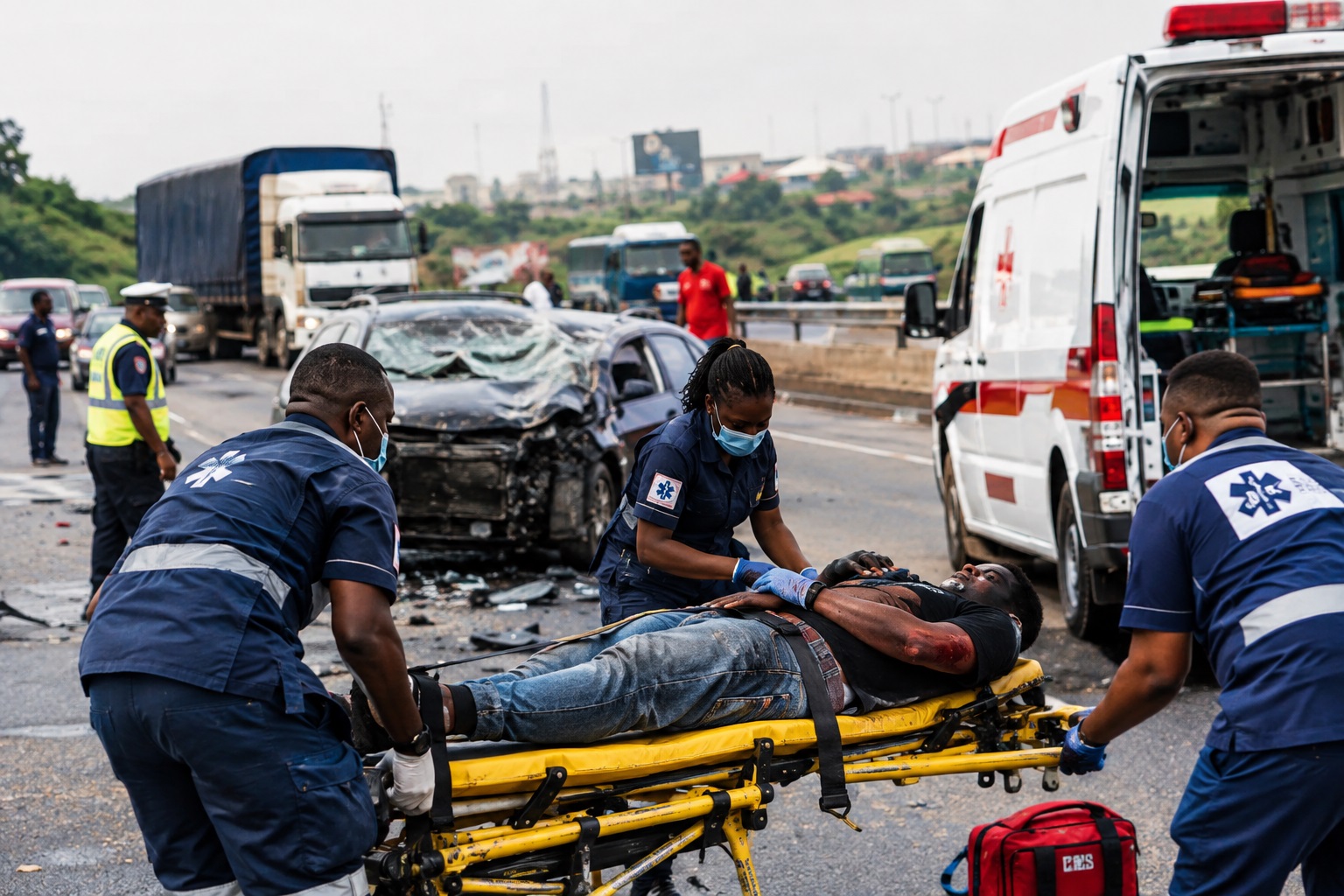
Road traffic crashes remain one of the leading causes of preventable death in Nigeria. According to the Federal Road Safety Corps (FRSC), Nigeria recorded 10,446 road crashes and 5,289 deaths in 2025 alone, with over 33,000 people injured — a rise in total crashes even in a year where fatalities dipped slightly. Independent analysis has placed Nigeria’s true annual road-death toll considerably higher than official figures capture, and has estimated the survival rate for road accident victims in Nigeria at only around half.
The pattern behind these numbers is consistent: delayed emergency response, an absence of equipped ambulances along major highways, and low public knowledge of basic first aid. These are
precisely the gaps SGAF was built to close — and precisely where a relaunched, well-funded SGAF can make a measurable difference
The Relaunch: What We Are Building
Geographic scope: major highways and toll gates nationwide, prioritised by crash frequency and distance from existing hospital emergency services
Ambulance Fleet
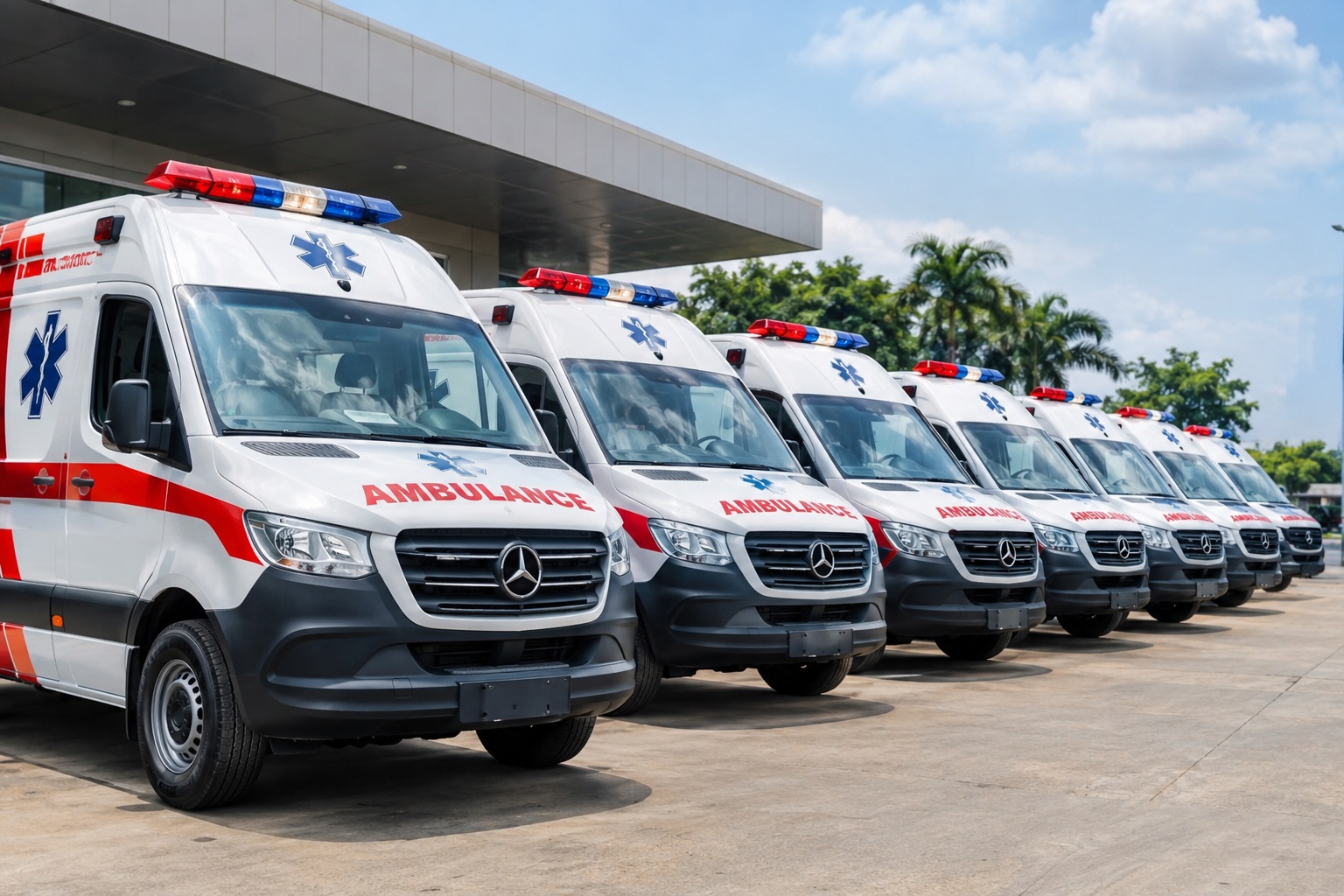
Procurement of a fleet of fully-equipped ambulances (Basic and Advanced Life Support configurations) to be stationed at strategic highway points and dispatched to accident scenes.
Emergency Ambulance Rescue Centres (EMARC)
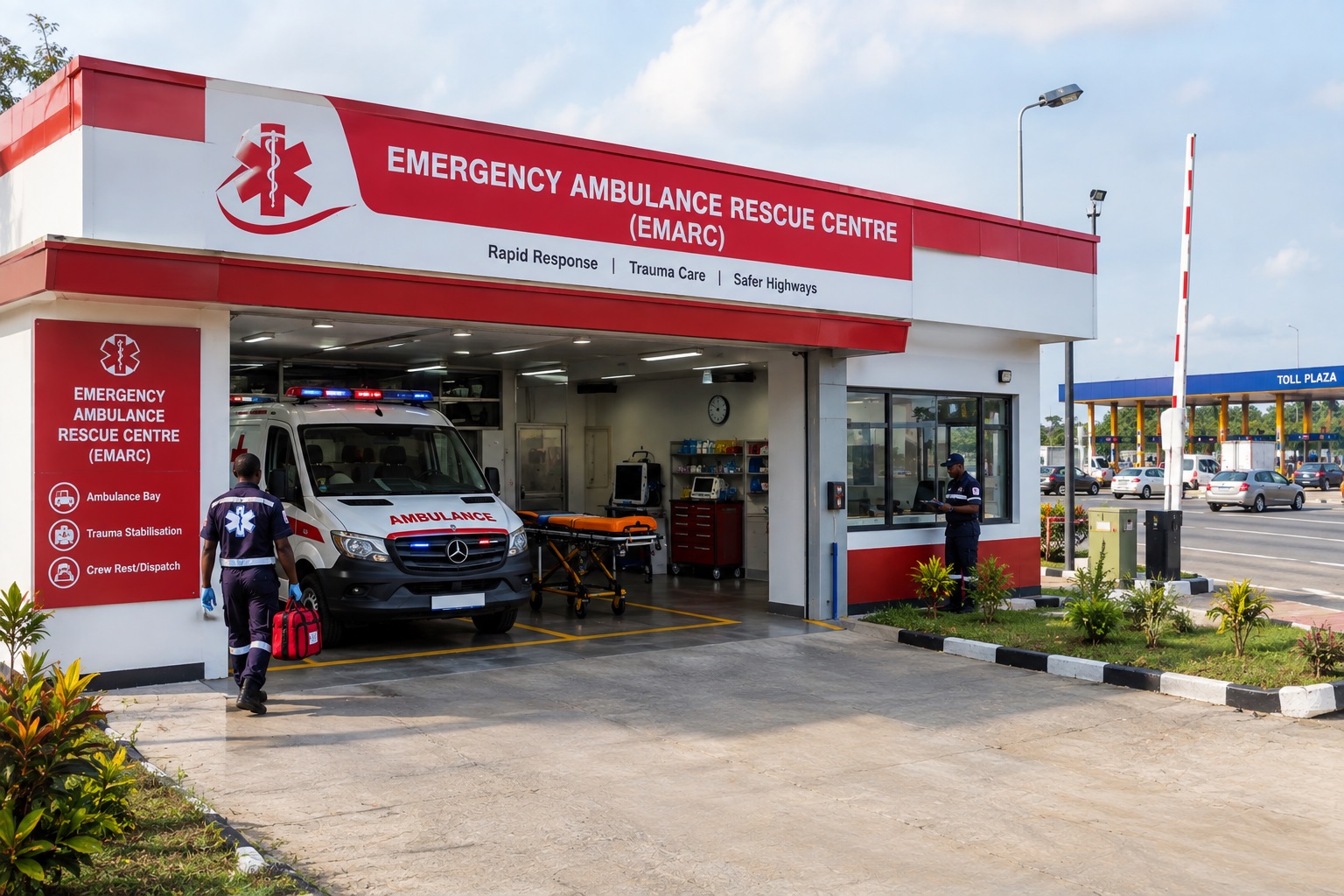
Small, staffed rescue posts at major toll gates and high-crash corridors, each combining an
ambulance bay, basic trauma stabilisation equipment, and a rest/dispatch point for crew, modelled
on SGAF’s original 2003 aims and objectives.
Public First Aid & Driver Training
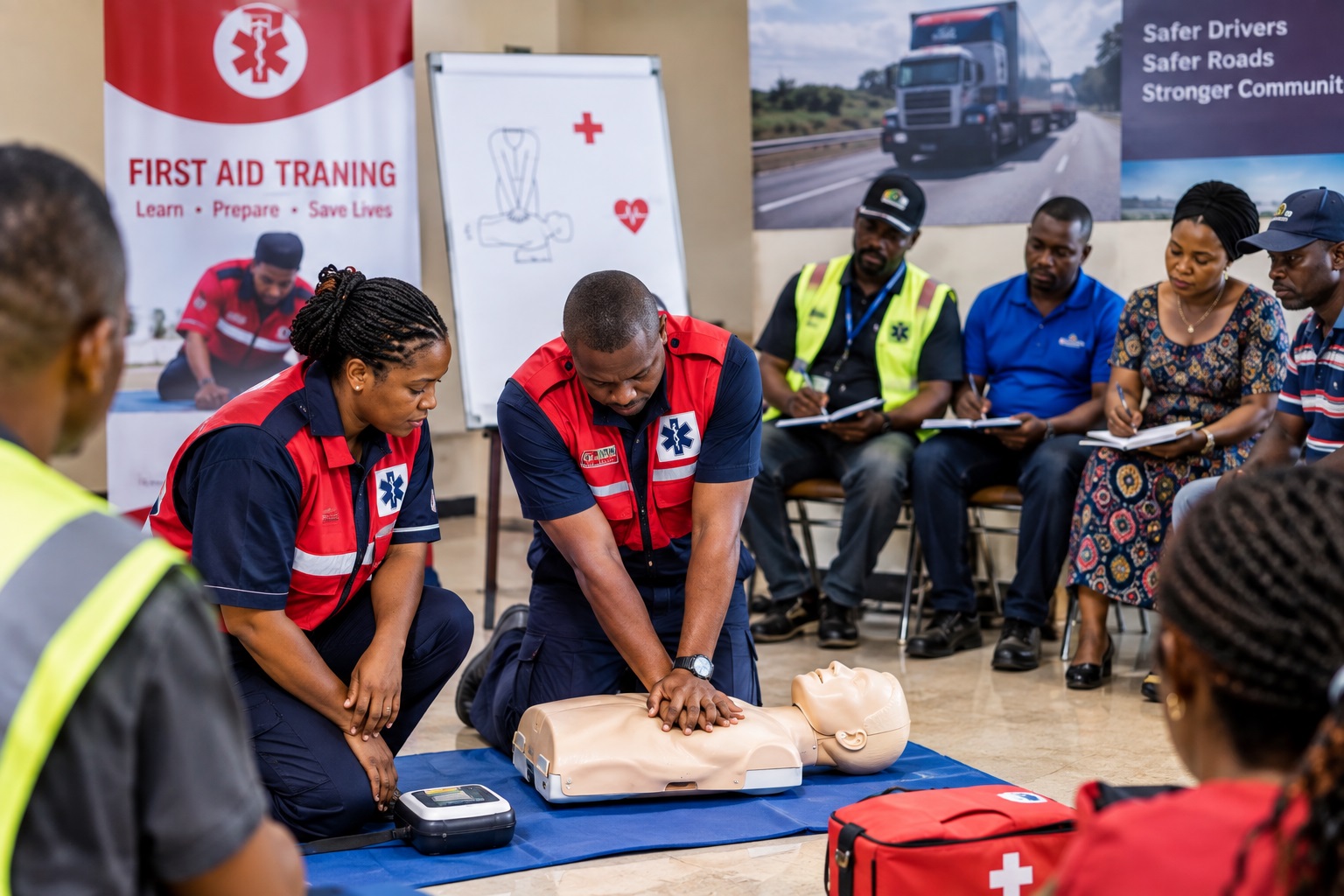
Recurring first-aid training workshops for the general public, commercial drivers, and transport
unions (building on SGAF’s prior collaboration with the Nigerian Red Cross Society and its historical
target audiences, RTEAN and NURTW), plus training and certification for SGAF’s own ambulance and
rescue crews.
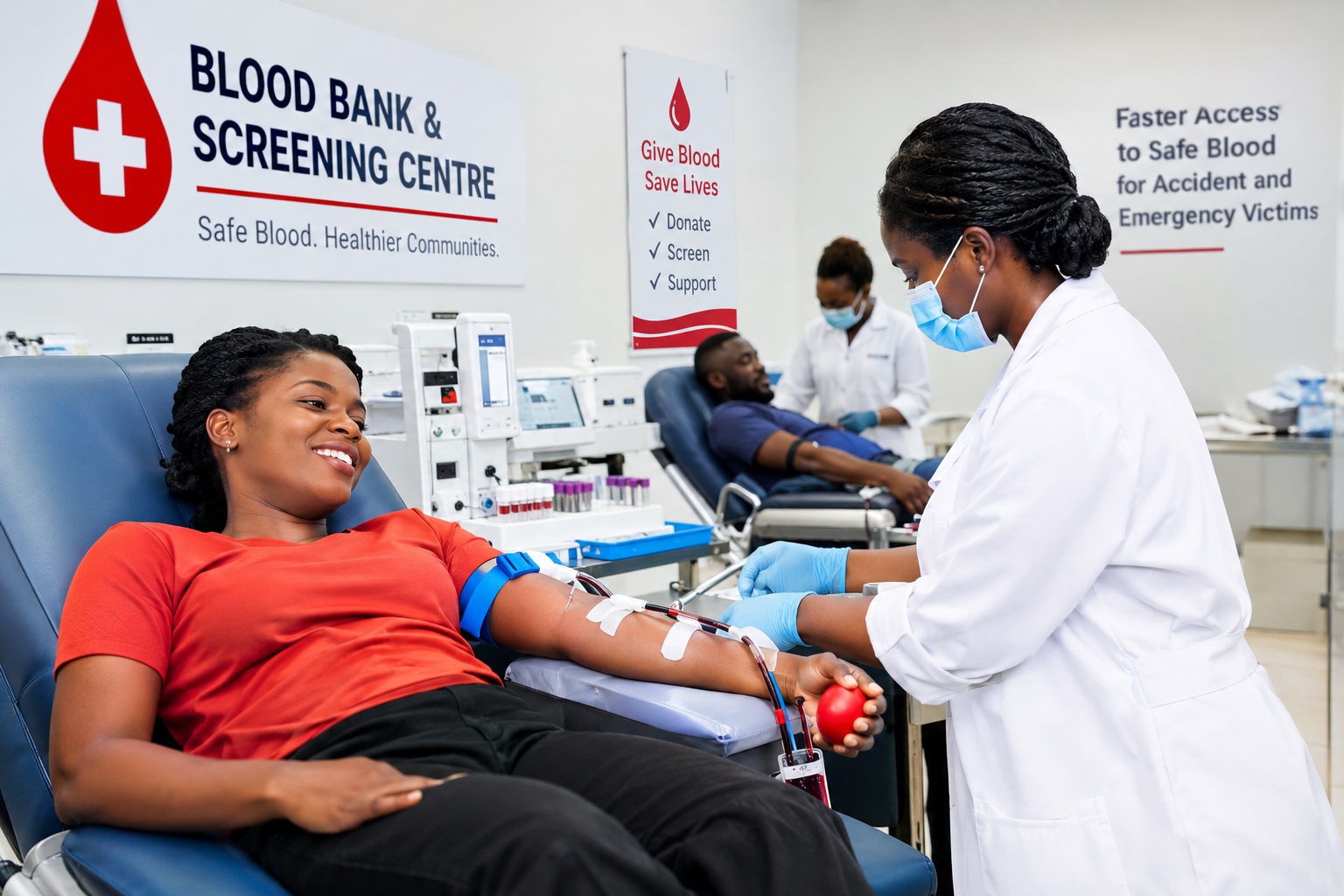
Blood Bank & Screening Support
Pilot blood bank and screening centres to ensure accident and emergency victims have faster access to safe blood.
The Ask: ₦12 Billion Campaign
We are seeking ₦12,000,000,000 (twelve billion naira) to fund a phased, three-year relaunch of
SGAF’s ambulance and rescue operations. This is a scoping estimate intended to be refined jointly
with government and institutional partners as procurement and site details are finalised — not a
fixed, non-negotiable figure
| Item | Detail | Amount (₦) |
|---|---|---|
| Ambulance Fleet | 60 fully-equipped BLS/ALS ambulances at an average of ₦100 million each, inclusive of import duties and medical fit-out | 6,000,000,000 |
| EMARC Rescue Centres | 20 Emergency Ambulance Rescue Centres at major toll gates/highway corridors — construction, equipment, generators, staff quarters | 3,000,000,000 |
| First Aid & Driver Training | Recurring public and driver training workshops over 3 years, incl. materials, trainers, and venues, with the Nigerian Red Cross Society | 1,000,000,000 |
| Crew Recruitment & Certification | Recruitment, training, and certification of paramedics and rescue crew for the fleet and EMARC posts | 800,000,000 |
| Blood Bank & Screening | 2 pilot blood bank/screening centres and mobile screening units | 500,000,000 |
| Monitoring, Evaluation & Administration | 3-year programme office, M&E systems, independent financial audit | 500,000,000 |
| Contingency (~2%) | Cost overruns, currency fluctuation, emergency reserve | 200,000,000 |
| TOTAL | ₦12,000,000,000 |
Figures are planning estimates based on 2026 Nigerian market pricing for fully-equipped ambulances (approx.
₦80–180 million per unit depending on specification) and will be finalised with formal vendor quotations
before funds are drawn down
Ways to Partner With Us
Individuals & Diaspora
Sponsor a specific, tangible item — a first-aid kit, a training slot, a share of an ambulance — with
clear reporting on what was funded.
Nigerian Government (Federal & State)
Co-funding or in-kind partnership for EMARC sites on federal and state highways, aligned with FRSC
and NEMA’s existing road-safety mandates.
International Organisations & Foundations
Full programme partnership aligned to SDG 3 (Good Health and Well-Being), with formal M&E
reporting, independent audit, and multi-year grant structuring.
Official Account Details
Donations may be made directly to the Foundation’s official account with Zenith Bank. The account
name must read exactly as shown below — always confirm this before sending any transfer
| Account Name | St. George's Ambulance Foundation |
|---|---|
| Bank | Zenith Bank Plc |
| Naira Account | 1216495288 |
| Dollar (USD) Account | 5071916506 |
| Pounds (GBP) Account | 5060488115 |
Transfers of ₦1,000,000 (or currency equivalent) and above may require internet banking confirmation or a confirmation letter to the bank — for these, please contact us directly so we can guide you through it and issue a formal receipt.
Accountability & Reporting
● All funds will be received into a dedicated bank account, subject to SCUML compliancereporting.
● Quarterly financial and programme reports will be issued to all institutional donors.
● An independent external audit will be conducted annually for the duration of the campaign.
● Every ambulance, EMARC site, and training cohort funded will be individually trackable backto its funding source.
Implementation Timeline (3-Year Phased Rollout)
Funds will be drawn down in three phases, each tied to specific, verifiable deliverables — not released as a single lump sum.
| Phase | Key Deliverables | Budget Share |
|---|---|---|
| Year 1 Mobilisation & Pilot | Board reconstitution and governance refresh; independent opening audit; procurement of first 15 ambulances; 5 pilot EMARC sites; training curriculum refresh with the Red Cross and first training cohort; M&E system set up | ₦4,800,000,000 (40%) |
| Year 2 Scale-Up | 25 additional ambulances; 10 additional EMARC sites; expanded recurring training programme; first pilot blood bank/screening centre; first independent annual audit | ₦4,200,000,000 (35%) |
| Year 3 Consolidation | Remaining 20 ambulances; remaining 5 EMARC sites; second blood bank/screening centre; sustainability and handover plan; second independent audit | ₦3,000,000,000 (25%) |
Disbursement into each phase is contingent on the independent audit of the prior phase being signed off. This structure is designed to give institutional donors confidence and control at every stage.
Expected Impact
The following are planning projections based on the scale of the programme and comparable
emergency-response interventions elsewhere; they will be refined once baseline data is collected in
Year 1, and reported against actual results thereafter.
60
Ambulances deployed nationwide
20
EMARC rescue centres established
3
Years to full rollout
15,000+
Highway corridors with faster
emergency coverage
20+
Highway corridors with faster
emergency coverage
Quarterly
Public reporting cadence
The underlying goal is straightforward: fewer of the roughly 5,000+ Nigerians who die in road
crashes each year should die specifically because help could not reach them in time or because no
one nearby knew what to do in the first minutes.
Partnership & Recognition Opportunities
For donors who wish to fund a specific, named component of the programme rather than the
general campaign:
| Tier | What is Funds | Recognition |
|---|---|---|
| Platinum Partner | A fully-equipped ambulance (₦100m) or an EMARC rescue centre (₦150m) | Naming rights on the vehicle/centre; permanent recognition in annual reports |
| Gold Partner | A full training cohort or a blood screening unit (₦25–50m) | Named sponsorship of the cohort/unit; logo on training materials |
| Community Partner | A first-aid kit bundle, a single training slot, or general support (any amount) | Listed as a supporting partner on SGAF's donor wall and website |
Risk Management
| Risk | Mitigation |
|---|---|
| Funding shortfall or delay | Phased, milestone-based disbursement so partial funding still delivers a complete, working pilot phase rather than a stalled full-scale plan |
| Procurement / import delays | Vendor pre-qualification and quotations obtained before funds are drawn down for that phase |
| Governance / leadership transition | Formal reappointment of Board Chairman and reconfirmation of all trustees as a Year 1 milestone, independent of programme funding |
| Site security on highway corridors | Site selection done in coordination with FRSC and local security agencies before construction |
| Currency fluctuation | Contingency line item; phased procurement rather than a single upfront purchase order |
| Financial mismanagement | Dedicated bank account, SCUML compliance, quarterly reporting, and annual independent external audit |

Supporting Documentation on File
The following original documents are held by SGAF and available for verification by donors, government partners, and international agencies:
- CAC Certificate of Registration, Incorporated Trustees (2003)
- SCUML Certificate of Registration (2021)
- NEMA collaboration acknowledgement letter (2004)
- Lagos State Government / LASAMBUS commissioning invitation (2004)
- Nigerian Red Cross Society first-aid training workshop materials (2004)
- Board of Trustees list and founding governance documents
- Photographic records of past rescue operations, training workshops, and community outreach
- 2022 18th Anniversary/Investiture programme records